
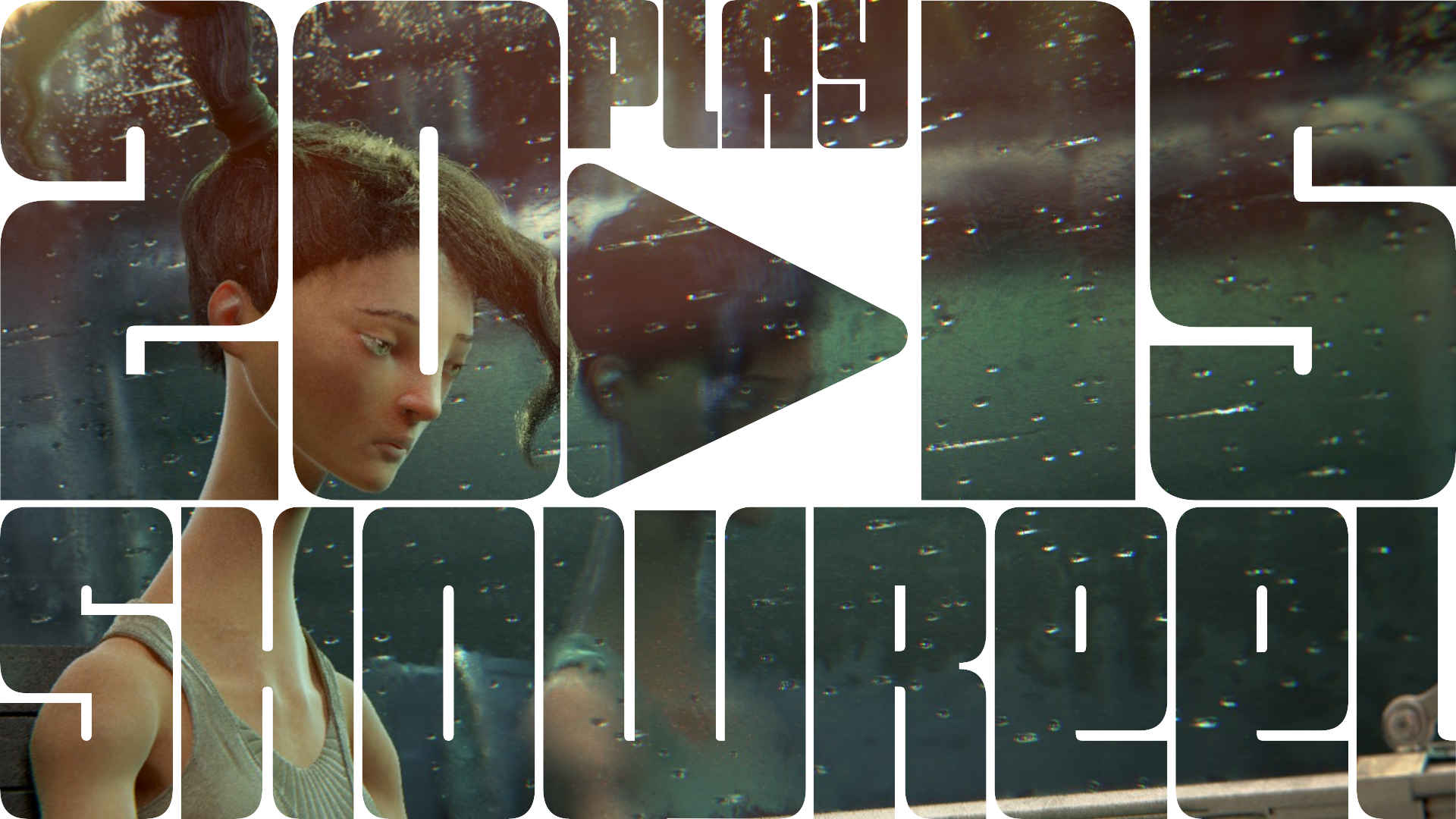
It’s been a great week here since Pablo arrived and has been doing amazing work shading Gilga’s hair with cycles- can’t wait to show his results. This weekend, we took some downtime, hanging out and blending at the Haymarket Cafe. Famed Gnome designer Jakub Steiner was lamenting the lack of an easy way (there is of course, a difficult way) to make a quick ‘typing’ effect for Blender text objects. I thought it would be a fun hack so I made this addon.

Grab it from pasteall!

Read More

Great news everyone!

This coming Tuesday we welcome Pablo Vazquez, who’s visiting us for 5 weeks to work on kicking off our lighting/look dev pipeline, giving me time to focus on finishing our animation tasks up.

Currently we are almost out of character animation shots- the remainder of our animation is all technical in nature. We’ve started lighting- gradually switching our pipeline over to Cycles (but not 100%)- but at this point we have no lit shots that I can call ‘final’ in lighting and/or compositing.

Pablo is our secret weapon to change that. Much as we needed Chris Bishop’s skills as an anim supervisor to get through the bulk of our character anim (and to a much higher standard than I had even hoped for), we will benefit from Pablo’s sheer artistic and technical awesomeness to get things in shape.

For those of you who don’t know, Pablo is known in the Blender community as venomgfx, and has worked on multiple Blender Open Movie (and game!) projects, authored an amazing set of tutorial DVDs (Venom’s Lab) and worked on many commercial projects. We worked together in Buenos Aires on Plumiferos, the first feature made in free software, and I have had the pleasure of pulling all-nighters with him just before the Blender Conference to make interstitials for the Suzanne animation festival. This month is going to be a great one for me, and I hope for Pablo and the rest of the lighting team too. We’ll try to post more about our awesome team and their pipeline during the month.

Lets hope the local Mate meets his standards!

Read More

Well, as you might have guessed, caustics converge very slowly in cycles- meaning, if you want them to look good, you will need many samples to get rid of fireflies. Clearly this is why the ‘no caustics’ button is available in the renderer- a must if you’re using cycles for animation.

But: shadows from e.g. a glass monkey look awfully dark without caustics. Witness here:

So what to do? An ‘obvious’ trick is to use the incredible ‘light path’ node in the material node editor. Mixing a transparent shader and a glass shader using the ‘Is Shadow Ray’ output means that only shadows will use the transparent shader, while the rest will use the glass shader. This allows us to dial in the opacity of the shadow by varying the darkness of the transparent shader. Cool!

But, in the back of our minds, we all really regret missing those caustics. Enter the trick discovered on BA for making lights: use the dot product of the incoming and normal rays (this is basically getting the angle between the normal and the light ray) to a ramp. The multiply node allows to increase or decrease the intensity. Voilla! totally unphysical, yet very acceptable caustic effects, without the fireflies.

pretty good looking. It’s not ever going to look exactly like the real thing (obviously) but it is usually enough. The node tree for the setup? A mere bagatelle:

Read More

We are getting really excited to show all the incredible animation and amazing render tests coming off the farm. And even though we don’t want to let *too* much slip before time, I know Bassam is planning an update with some teaser images and production notes pretty soon.

Today I’m happy to share news of MediaGoblin, a libre software “publishing system” for images, video, audio and more that friends of Bassam’s and mine are building. It’s a single replacement for Flickr, YouTube, SoundCloud, and similar that anyone can run (like WordPress), but federated to keep files under user control. It’s very extensible, with support just added for 3D models now suggesting an alternative to Thingiverse. But I’m especially excited about MediaGoblin because it will establish the core functionality we can use to implement a lot of cool ideas we’ve had during Tube production for a collaborative platform that also fills the huge need for a solid asset management pipeline, a kind of super-Helga with some interesting properties. We’ve been talking to a bunch of developers about putting together a free software project after Tube, in which there’s been a lot of interest, and I have a thought that we could get studios to pool resources instead of each rolling their own and occasionally making a dead-end free software release.

A few weeks ago at the Blender Conference, we were talking with the renderfarm.fi developers about how, together with their distributed rendering, and these fairly near-future pipeline/collab possibilities, it seems like a lot of big pieces falling into place. MediaGoblin is worthy in its primary goals, but of especial interest for providing much of the functionality we’d need, plus perks like federation that we’ve dreamed about. Coding with Will Kahn-Greene, formerly of the Participatory Culture Foundation, the project lead is Chris Webber, until recently a developer at Creative Commons, and also a Blender user who did the anim in the excellent Patent Absurdity doc. And as part of the Tube Open Movie, Chris helped build pipeline scripts as well as our Reference Desk tool, one of the programs inspiring the new asset branch in Blender.

bassam_bconf2012_sebastiankoenig

Today MediaGoblin has a nice write-up at Libre Graphics World, concluding:

If you are concerned about having full control over images, videos and audio records that you put online, you have just a few days left to support development of MediaGoblin — an awesome free software project that decentralizes media storage.

If you are a VFX or animation studio, or even a 3D printing company, you have even more reasons to support the project. With initial support for 3D models (STL and OBJ) MediaGoblin has a great chance to grow into a scalable digital asset management solution that is free to use and modify.

Finally, if you are a developer who’s good at Python, MediaGoblin could do with your contributions.

** Donations are tax-deductible in the US and also support the Free Software Foundation, which hosts the campaign.

And thanks for anything you can do to help this awesome project by passing the word!

Read More

Our main production server just went down (It’ll be fixed soon) so I thought ‘good excuse to post on the blog’. We’ll be working through the downtime – this mainly hurts our ability to exchange files, most of us are working off local files anyway- but it will be a relief when things are back to normal.

Current tasks are animation, texturing, lighting. We’ve got some awesome new team and I’m looking forward to the days to come. As we’ve been doing online weeklies, each one has had a banner image – just a random image from the project folder or whatever I happened to be working on at the time. I thought I’d upload some here:

2

Picture 1 of 8

Read More

Quick Announcement for those in the Boston Cambridge area!

I’ll be giving a Blender workshop at Software Freedom Day. It’ll be a fun event for folks who are new, or not!

When: Saturday, Sept. 15th, 10am – 5pm

Where: Cambridge College, 1000 Massachusetts Avenue, Cambridge, MA

Software Freedom Day is celebrated all over the world. Join us locally
for a morning of hands-on learning and an afternoon of finding out
what’s new and exciting in the world of free software. The event is
free and open to the public!

The venue is very close to the Harvard Square stop on the MBTA Red
Line or accessible by the #1 bus. Coffee will be provided and lunch
will be on your own.


My workshop will most likely be at 11, but I’m not 100% sure that schedule won’t change.

It’ll be fun! we’ll do animation, basic modelling, etc.


Read More

Calling all students (18+), recent graduates, and professionals wanting to ply their 3D skills in libre software:

Join Bassam and the URCHN crew this autumn on the Tube Open Movie production, hosted by the Bit Films animation incubator at Hampshire College, Massachusetts. Helmed by Chris Perry, formerly of Pixar and Rhythm & Hues, the program draws together a lot of talent, so although the internships are unpaid, it promises to be a very stimulating and fruitful space. These positions offer an opportunity to improve your skills, develop your reel, and make useful contacts in the industry.

The official internship period runs from Monday September 24, 2012 through Friday December 14, 2012.. Applications are due (via email) no later than Friday September 14, at 5pm (EDT). We understand that this may be short lead time for those needing to make visa and travel arrangements. Because the project is ongoing, the internship period is flexible; if in doubt, apply!

Please read carefully the open positions announcement and FAQ! Have more questions? Email us: internships@bitfilms.com

Read More

As we are steadily pushing through to finish animation, Thomas has been creating rough mockups of the sound design, so we can iterate early and come to some conclusions before the final minute. Each time, we discuss some things about the sound, how to improve it, etc.

This time, I was getting annoyed going back and forth between a text editor and blender- clicking on one and then the other (focus follows mouse would be much, much better here!) and different hotkeys etc. Plus, text in a text editor requires me to estimate the frame/time of the note each time.

Then I had a little brainwave and downloaded gnome subtitle editor, and writing my comments as subtitles. It goes much smoother now and is a nice tip for teams who need to give feedback on videos. It’s also possible to use blender, but there the workflow would be a bit more tedious with markers (though grease pencil in the sequencer- if grease pencil could be used to display text as well as drawing, and could be rendered would be even better for me)

so here’s a little screenie in action. I paused it at a familiar shot so I wouldn’t show spoilers…

there’s actually many choices here – you can use video editors or blender (but then you have to render) or any number of subtitle editors. I just thought it was a neat use of something for the (wrong?) purpose.

Read More

Hey Folk,

Quick one since this isn’t really a production topic. I’m back from OSCON where I gave a talk about Tube. I talked a bit about the (very short) history of open movie projects, the motivations of making tube and some other topics that would in themselves make a nice post. I also showed some hitherto unseen work in progress shots, and demo-d a bit creating a crowd scene with the autowalking. Some of the ideas that I came to the conference with (about making open movies mainly) are probably best saved for their own post.

Due to the ‘giving a talk’ effect of preparing up till the last minute, I ended up missing pretty much the first half of the conference, and sat out most of the last day doing Tube stuff – I thus didn’t get to attend that many of the talks. Those that I did sit in were interesting – though some were not quite open source in topic. I was very interested by the panel on software patents, and I’m rather enamoured of Bradley Kuhn’s idea of a ‘free software patent troll’. I’m not sure this would work, but it’s fun to contemplate.

I also did an interview during the conference with Linux Format, and another with O’Reilly media:

During the week I met with several new and old friends, including some of the past and present Tube crew! Chris Webber (of mediagoblin fame) who coded reference desk (part of the mini-demo) and Oscar Baechler, who rigged a bit earlier in the project, and now returns as an animator. In the weekend following the conf, I took a train from Portland to Seattle, and met with our assistant producer and previous production manager Liz Ellis, who’s now launching a web series, also in the free culture vein, and with Oscar (again) and Nathan Vegdahl, who continues to be fabtacular.

I managed to destroy my achillis tendon (again) running a 5K, and then getting lost the next day and wondering around Portland for 3 hours. I took a lot of taxis after that. I also quite typically did not take a single photo of the conference itself, nor of any conference related activities. Here are a bunch of random snaps (mainly in Seattle, though a couple are in Portland). I’m not sure how I feel about that bus.

Read More

I’ve done some prior experiments in Soft IK, but shied away for it in gilgamesh because the rig was getting too complex for it’s own good, and because I couldn’t find a satisfactory way of solving it in blender 2.5 and above (my 2.4 solution depended on py constraints). Since we have great drivers in 2.5/6 series, I thought I’d try it that way. The result is below:

I’m guessing only seasoned animators will see the difference. From left to right we have:

  1. normal, non stretchy IK
  2. soft, non stretchy IK
  3. normal, stretchy IK
  4. soft, stretchy IK

Ik softness basically takes  care of the ‘pop’ at the knee so common in IK when going from straight to bent (or vice versa). This works out because the speed of that joint non-linearly increases as we are close to straight. Good sources here and here (softimage blog). My solution for non stretchy is exactly the same as that blog post- plugging the equation into a driver. For the stretchy case it was a bit trickier and they diverge, but the mathematical result is the same.

I’m not publishing the .blend yet, nor can I use this as is in gilga because the solution depends on driving a bone within a bone inside the same armature; until I find a workaround or blender will successfully handle this case in the dependency graph, this solution causes lagging and errors (there are python frame update handlers here double calculating the rigs to make them behave)

Once I get this working I’ll publish a simple .blend.

Read More